
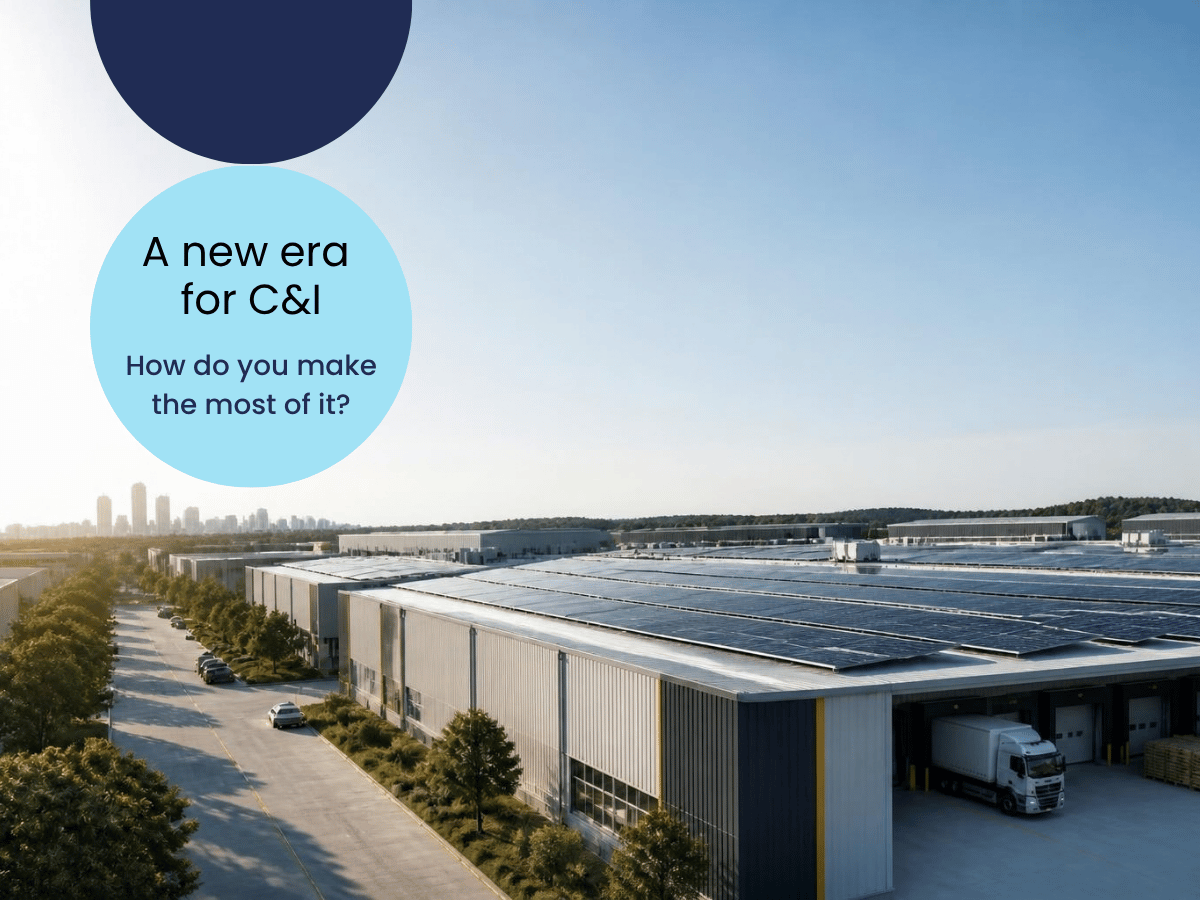
There are more ways than ever to create value for commercial clean energy customers.
From 1 October, the expanded SRES extends to eligible mid-scale solar above 100 kW and up to 1 MW. In NSW, the new PDRS battery incentives are strengthening the business case for commercial storage. Equipment pricing has improved, and the growing role of batteries and energy optimisation is opening up new possibilities.
It’s creating a significant opportunity for C&I, but also changing what it takes to put together a great project.
There’s more to consider across engineering, grid approval, incentives, modelling, optimisation and finance. Particularly in NSW, the industry is still working through some of the practical requirements around PDRS including planning approvals such as CDCs or DAs.
For installers who understand how to navigate these moving pieces and know when to bring the right specialists into the conversation, getting it right can become a competitive advantage.
Snapshot
- The opportunity is expanding: SRES and PDRS are changing the economics of commercial solar and storage.
- There’s more to navigate: planning, grid, compliance, modelling, incentives and finance will all influence the business case.
- Batteries bring a broader value stack: including peak-demand savings, self-consumption, wholesale markets and optimisation.
- Good modelling matters: particularly when future energy-market dynamics and electricity prices aren’t as predictable as solar generation.
- A battery is a product wrapped in a service: optimisation
,monitoring and maintenance create an ongoing customer relationship. - You don’t have to do it alone: bringing the right experts together can help de-risk
the project for both installer and customer.
More opportunity. More to consider.
Commercial solar is relatively well understood. Generation can be modelled using years of weather data and the process from design through to installation is familiar.
Storage opens up a broader value stack. A battery can potentially create value through peak-demand reduction, greater solar self-consumption, energy arbitrage, wholesale market participation and optimisation. How it’s designed, controlled and maintained can all affect the outcome.
So the conversation is no longer simply: How big should the system be and how much energy will it generate?
It’s also: How can we get the most value from the energy this business generates, stores and uses?
In NSW, installers are also working through the practical requirements of PDRS. Depending on the project, that can mean planning approvals such as CDC or DA engineering, grid approval and certification alongside the scheme’s own compliance requirements.
The incentive may improve the business case, but understanding the whole project is essential to knowing what really stacks up.
Getting it right can be a competitive advantage
The answer isn’t for every installer to become an expert in everything.
Today’s C&I opportunity can bring together: Engineering + grid + incentives + modelling + optimisation + O&M + finance.
Knowing which expertise is needed and bringing those people into the project at the right time can help build a more robust business case and give the customer greater confidence in their investment.
Instead of trying to remove every layer of complexity, the opportunity is to manage it well and make the experience simpler for the customer. That’s where differentiation can happen.
A battery is a product wrapped in a service
There’s another important shift happening with storage.
Unlike a solar system, the customer relationship doesn’t necessarily end when the installation is complete.
How a battery is controlled and optimised affects the value it delivers. Equipment may require ongoing servicing to maintain warranties and performance. Energy markets change. Customer loads change.
In that sense, a battery is a product wrapped in a service.
For installers, that creates opportunities for ongoing optimisation, maintenance and customer engagement, moving the relationship beyond a single transaction
SRES + PDRS create a reason to revisit the pipeline
With PDRS underway and expanded SRES commencing on 1 October, now is a particularly good time to revisit existing opportunities.
A previous solar proposal might now warrant a broader solar + storage conversation. A project that didn’t meet the customer’s required payback may look different today. An existing solar customer may have an opportunity to add storage.
The important thing is to look at the whole business case, not just the incentive.
Finance is part of the picture
Funding is another piece that is best considered early.
Weve all seen proposals with what appears to an amazing business case, but time after time, customers are delaying saying “yes”.
In truth, energy management is not core for most organisations (they tend to focus their efforts on sales, marketing and HR management). As a result getting capital allocated to projects, despite attractive paybacks, is often challenging. Larger projects can also create working-capital challenges for installers through equipment deposits, progress payments and project timelines.
That’s where Smart Ease fits. We’re the funding specialists working alongside the technical, energy and incentive experts.
Bringing funding into the conversation early means it can be structured around the project, expected savings and the customer’s cash flow. Options such as split and progress payments can also help installers manage their own cash flow through delivery.
Now is the time to revisit your C&I pipeline
With PDRS underway and expanded SRES now here, take another look at the opportunities already sitting in your pipeline.
Which solar projects could now stack up differently? Which customers could benefit from adding storage? Where could incentives, optimisation or a different funding structure turn an old proposal into a new conversation?
You don’t need to work through every piece alone.
Bring Smart Ease into the conversation early. We can work alongside you and your other project partners to help structure funding around the project and the customer’s cash flow, and help you move more C&I opportunities from proposal to signed project.
Got a C&I opportunity you want to revisit?
Talk to the Smart Ease team